

 If you walk through a workplace today, it feels different from what offices used to be. Work isn’t just typing spreadsheets or filing paperwork anymore — it’s video calls, focused digital work, collaboration zones, deep-thinking hours, and switching between tasks and devices constantly.
With this shift, one truth is becoming hard to ignore:
Comfort now has a direct relationship with performance.
Yet ergonomic furniture is still occasionally seen as a “nice-to-have.” Something to consider when budgets allow. But organisations rethinking workplace strategy are starting to recognise ergonomics differently — not as an upgrade, but as a contributor to wellbeing, consistency, and meaningful productivity.
What Ergonomics Actually Means?
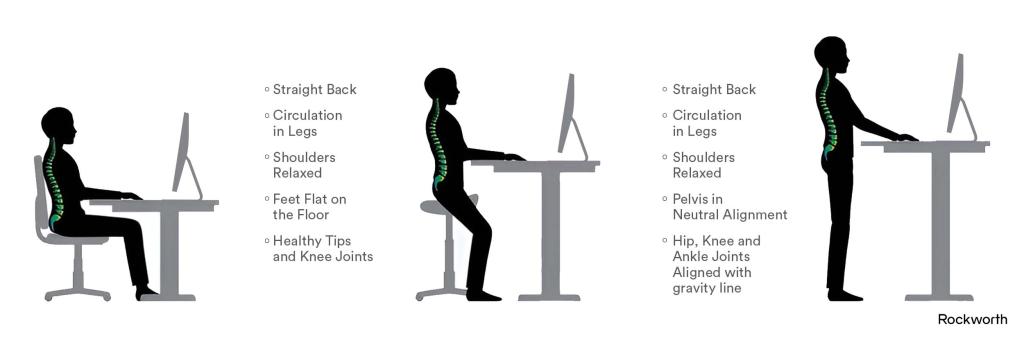
Ergonomics is designing the environment to fit the person — not the other way around. It ensures that furniture, posture, technology, and movement support the body instead of working against it.
Global guidelines like the WELL Building Standard, ISO ergonomics frameworks, ANSI/HFES standards, and OSHA positioning principles all reinforce the same idea: ergonomics reduces strain, improves comfort, and supports safer, healthier working habits — especially when screen time dominates.
It isn’t about perfect posture.
It’s about natural posture.
Why It Matters More Than Ever?
Across multiple workplace studies worldwide, one repeated theme appears: people experience aches, stiffness, and strain during desk-based work. It doesn’t always show up as injury — it shows up as:
- Tight shoulders after back-to-back video calls
- Lower back discomfort after long seated focus
- Constant shifting to stay “comfortable”
- Fatigue that appears earlier than it should
Discomfort is subtle — until it becomes distracting.
And distraction affects output.
What Happens When Ergonomics Is Prioritised?
When workplaces start aligning furniture, posture, and movement with how people naturally work, the shift isn’t dramatic — but it is noticeable.
People sit longer without strain.
Tasks require less physical effort.
Meetings feel sharper.
Energy lasts deeper into the day.
Multiple global studies show similar patterns: ergonomic interventions are associated with reduced musculoskeletal discomfort and improved workstation satisfaction, particularly in employees who work long hours at screens.
Some interventions have even been described as cost-effective when implemented intentionally, especially when paired with proper usage guidance rather than just equipment upgrades.
So while there isn’t one “fixed ROI number,” the direction of evidence is consistent:
Better ergonomics supports better work.
Where Ergonomics Shows Up in Workspace Furniture?
Ergonomics becomes much more tangible when connected to furniture choices — the items people interact with daily.
Task Seating
Most structured work happens seated, which gives the office chair a significant influence on comfort.
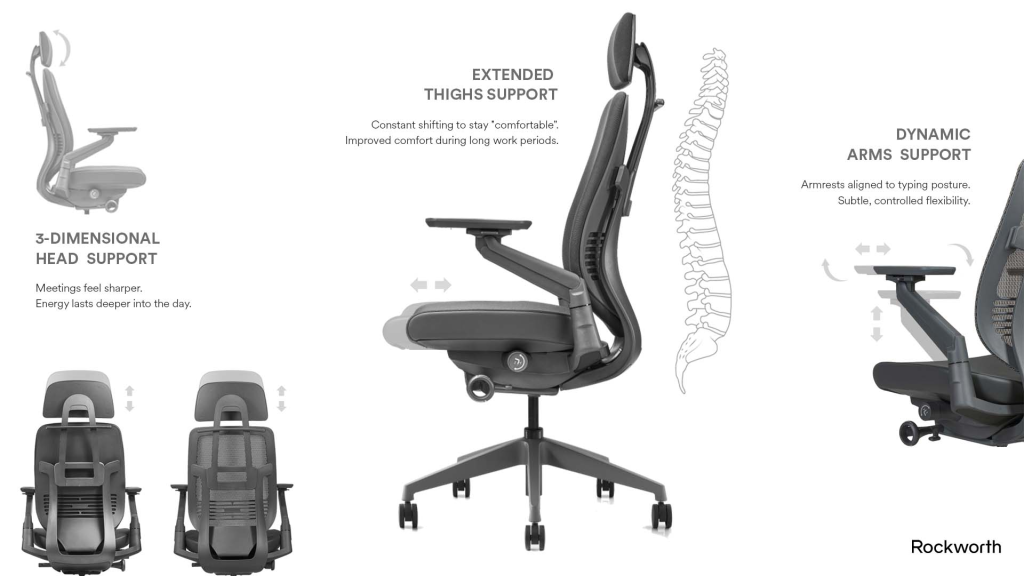
A well-designed task chair supports the spine, adjusts to the user, and allows natural micro-movement rather than locking the body in place.
Key ergonomic features include:
- Lumbar and spine-aligned support
- Adjustable seat height and depth
- Armrests aligned to typing posture
- Subtle, controlled flexibility
When the chair supports the user, posture feels effortless — not forced.
Workstations and Desks
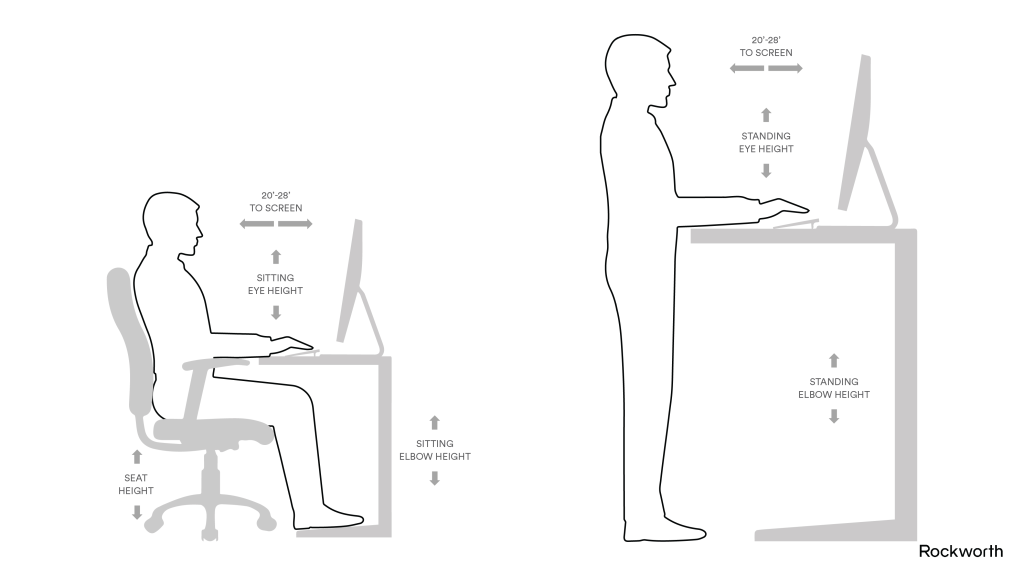
A workstation should support alignment — not compromise it. Desk height, depth, and flexibility contribute to how the body feels through long tasks.
Height-adjustable desks are increasingly valued because they introduce movement, which supports circulation and posture variety.
Ideal considerations include:
- Desk height aligned to elbow level
- Space for screens and accessories
- Sit-stand capability for posture variation
Movement-based desk systems reflect how modern work actually happens — not how it used to.
Screens and Alignment Tools
A surprising amount of strain begins with the wrong monitor height or angle.
Simple ergonomic tools — monitor arms, laptop stands, external keyboards — help align technology with natural eye line and wrist alignment.
Even small positioning adjustments can make a large difference in long-term comfort.
Collaboration Zones
Ergonomics isn’t only for individual desks. Meeting rooms, shared project tables, and informal collaboration spaces also benefit when furniture supports natural sitting posture and interaction rather than encouraging slouching.
When spaces match the way people communicate and move, conversations feel energising rather than draining.
Accessories That Support Posture
Sometimes, it’s the finishing pieces that complete the ergonomic experience:
- Footrests
- Wrist supports
- Adjustable lighting
- Anti-fatigue mats
- Cable management that reduces tension and clutter
These aren’t extras — they are enablers that make comfort effortless.
So Where Is the ROI?
The return from ergonomics rarely arrives as a dramatic single percentage — instead, it manifests as a cumulative set of outcomes:
- Fewer physical complaints and musculoskeletal issues among employees
- Reduced sick-leave days and lower absenteeism
- Improved comfort during long work periods — supporting sustained focus and better output
- Enhanced employee morale, satisfaction, and workspace loyalty
- Potential reductions in workers’ compensation and healthcare-related expenses
Several peer-reviewed studies and economic evaluations confirm these benefits. For example, a 20-week workplace ergonomics intervention delivered a 63% ROI from employer savings compared with usual practice. A recent meta-analysis across industries confirms that ergonomic measures significantly cut work-related musculoskeletal pain. Other case-study samplings show reductions in absenteeism, lower injury-related costs, and improved labour productivity and quality.
In practical terms, when you consider a typical 5- to 10-year furniture lifecycle, ergonomic investments often pay off in ways that standard procurement cost sheets don’t capture — not just as cost savings, but as sustainable workplace strength.
“What does discomfort cost — in energy, focus, and the employee experience?”
A More Future-Ready Perspective
The future of work values spaces that support people — not just the tasks they perform. Ergonomics sits at the intersection of wellbeing and performance, helping organisations design workplaces where comfort and productivity don’t compete — they reinforce each other.
A workspace shouldn’t simply function.
It should help people do their best work — comfortably, confidently, and sustainably.