

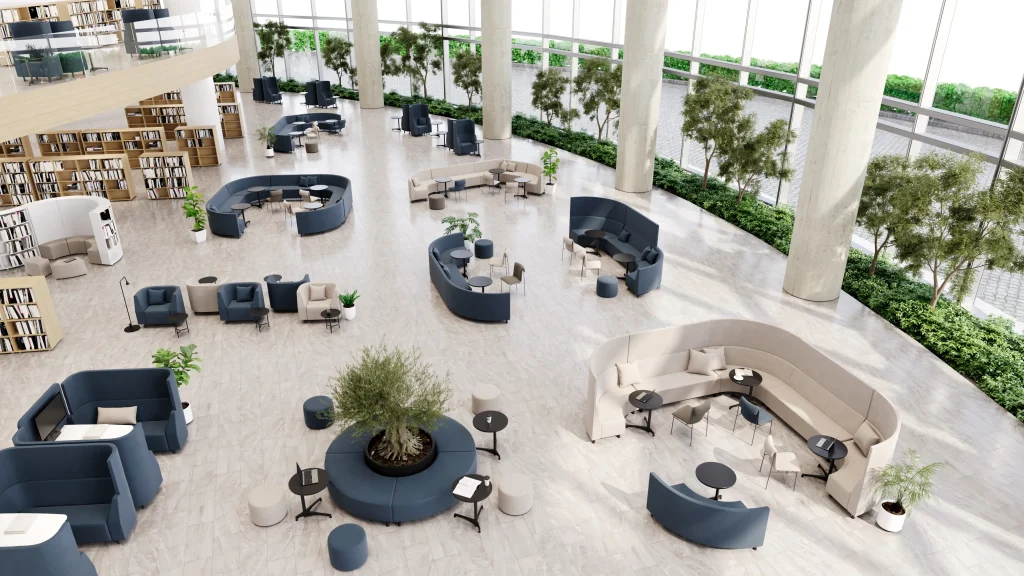
Hybrid work has reshaped the role of the office. Employees no longer come in because it’s routine—they come in only when the workplace offers more value than working from home. For organisations, this shift means the office must function as a destination that inspires people, supports their work styles, and makes collaboration effortless.
A hybrid-ready office isn’t just a layout change; it’s a complete rethink of the workplace experience. It blends flexibility, acoustics, ergonomics, technology, and hospitality-driven design to create spaces that people genuinely enjoy being in. When done well, it naturally increases attendance without pressure or policies.
-
Why Hybrid-Ready Office Design Matters in the New Age
Hybrid work gives employees freedom, and with that freedom comes intention. People now choose when and why they come to the office. The reasons are usually simple:
- Better collaboration than virtual meetings
- A space that helps them focus
- Social connection with colleagues
- A sense of belonging
- A comfortable, well-designed environment
When the office supports these needs, attendance rises on its own. When it doesn’t, employees prefer to stay remote. Designing a hybrid-ready workplace ensures the office remains relevant, meaningful, and worth the commute.
-
Creating Collaboration Spaces That Feel Like Hospitality
One of the biggest drivers for office return is face-to-face interaction. But traditional conference rooms alone aren’t enough. Modern employees prefer relaxed settings that encourage spontaneous discussions—spaces that feel more like a lounge or café than a formal meeting room.
Key elements of effective collaboration zones:
- Lounge seating that encourages longer conversations
- Modular sofas that adapt to different group sizes
- Café-height tables for casual brainstorming
- Poufs and flexible seating for informal catch-ups
- Soft textures and warm materials that feel inviting
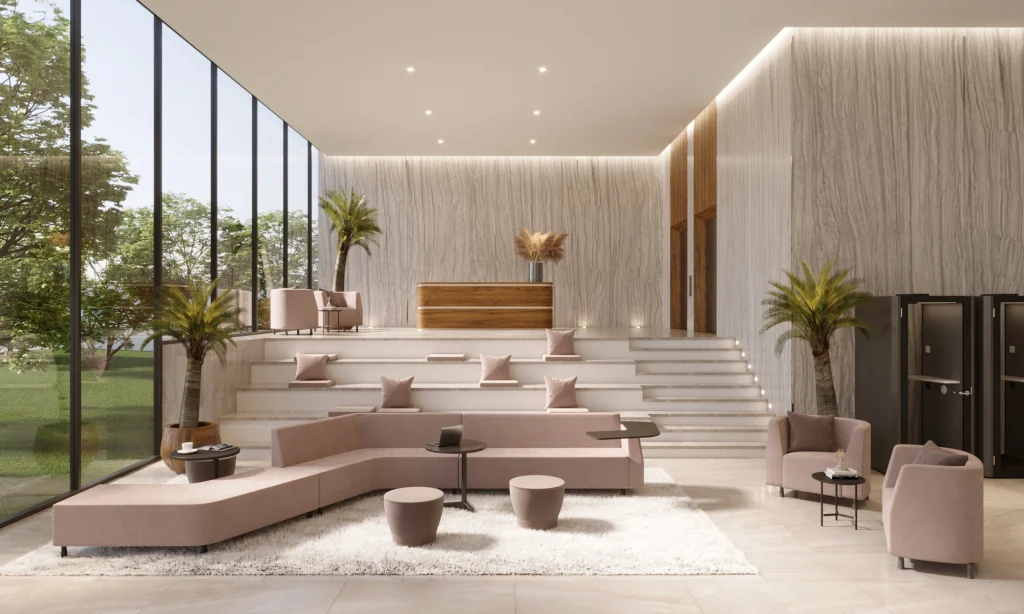
These spaces support the kind of quick discussions, team energy, and creative exchanges that remote work often lacks. They also strengthen culture by giving people places to reconnect.
-
Acoustic Design: The Foundation of Hybrid-Work Comfort
Noise is one of the most common complaints in open offices, especially with more employees joining calls and hybrid meetings throughout the day. Without proper acoustic planning, even the most aesthetically pleasing office becomes uncomfortable.
Effective acoustic solutions include:
- Wall acoustic panels that absorb sound
- Grooved or textured boards that enhance both design and performance
- Printed acoustic panels that double as art or branding
- Ceiling baffles for noise control in large areas
- High-back seating and booths that create instant quiet zones
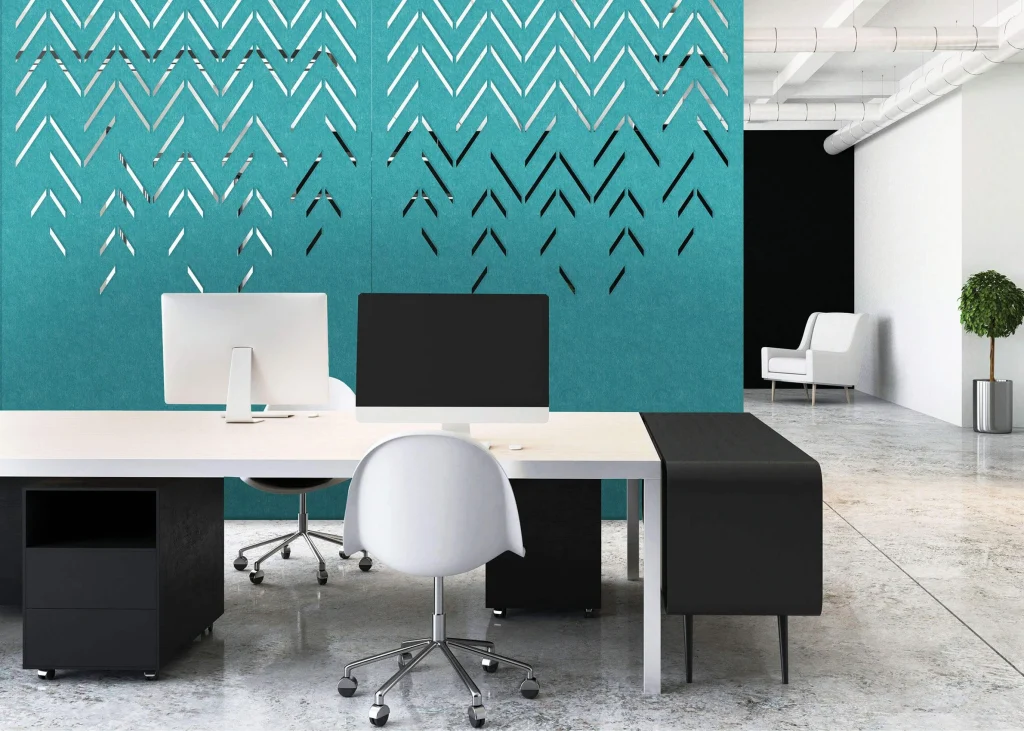
Good acoustics improve concentration, reduce stress, and make hybrid communication clearer. Companies that invest in sound quality see a direct improvement in employee experience.
-
Private Pods for Focus, Calls, and Hybrid Meetings
Hybrid offices need more than open-plan layouts. Employees also need places where they can step away from distractions to attend video calls, participate in interviews, or work in deep focus.
Why pods are essential:
- They provide sound-controlled privacy
- They create instant meeting or focus rooms
- They reduce the load on large conference rooms
- They are space-efficient and can fit anywhere
- They support 1-person, 2-person, or 4–6 person meetings
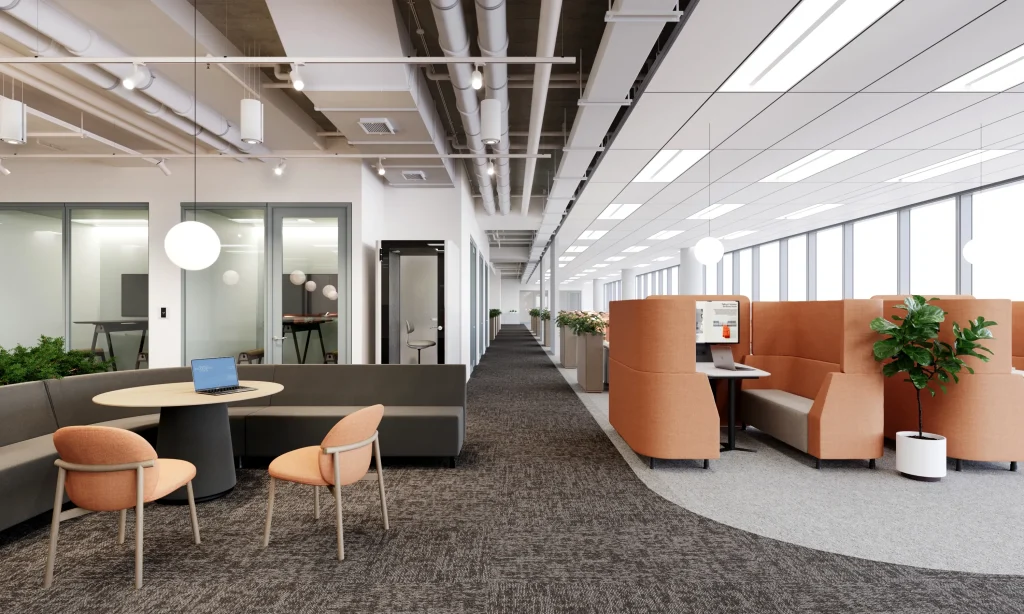
Pods offer a balanced solution between open areas and fully enclosed meeting rooms, giving teams the flexibility to collaborate or focus without disturbing others.
-
Flexible Workstations That Support Movement and Technology
Hybrid workplaces need workstations that adapt to fluctuating attendance and varied work styles. Traditional fixed desks no longer support how teams work today.
Workstation features that matter:
- Height-adjustable desks for healthier work habits
- Modular clusters that can be reconfigured as teams grow or shift
- Layouts like linear, 90°, 120°, and storage-based clusters
- Clean wire management that supports technology
- Privacy screens for semi-focus
- Mobile tables for project-based teamwork
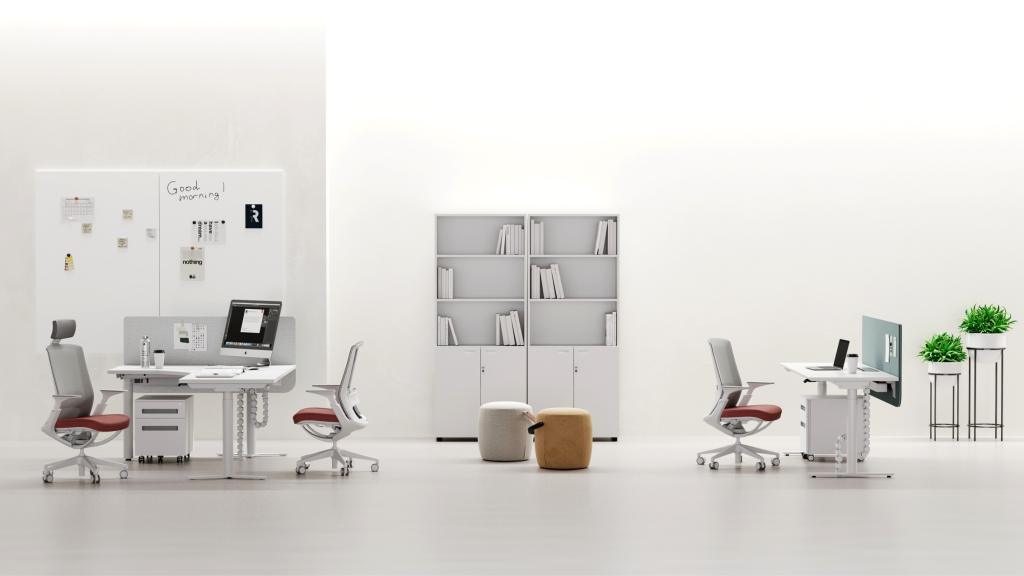
Height-adjustable desks in particular promote movement, reduce fatigue, and give employees more control over their workday—something highly valued in hybrid setups.
-
Ergonomic Seating: A Key Driver for Office Comfort
When employees split their time between home and office, they expect the office to offer better comfort and support. Ergonomic seating becomes a major differentiator.
Features employees look for:
- Adjustable lumbar support
- Headrests for long work sessions
- Flexible and dynamic arm support
- Breathable mesh for airflow
- Extended thigh support
- Smooth recline with multiple locking positions
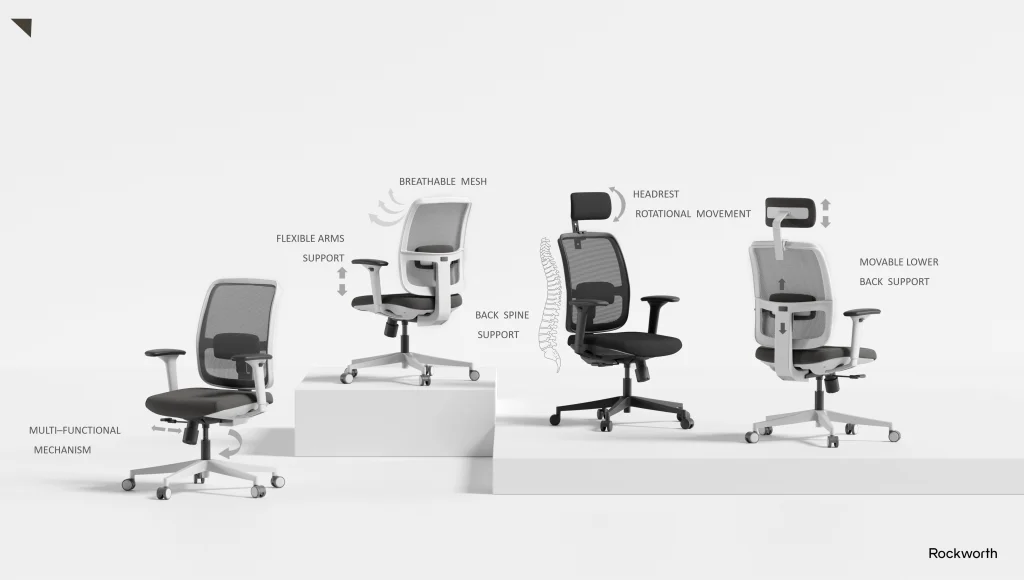
Comfortable ergonomic chairs significantly improve posture and productivity, making employees more willing to return to the office.
-
Why Experience-Focused Offices Encourage Return-to-Office
A hybrid-ready office succeeds when it improves the employee experience across multiple dimensions.
A well-designed hybrid space offers:
- Comfort: ergonomic seating, lounge areas, pods
- Choice: multiple settings for different tasks
- Movement: sit–stand desks, flexible furniture
- Privacy: acoustic panels, quiet booths
- Community: open collaboration zones
- Productivity: tech-integrated meeting rooms
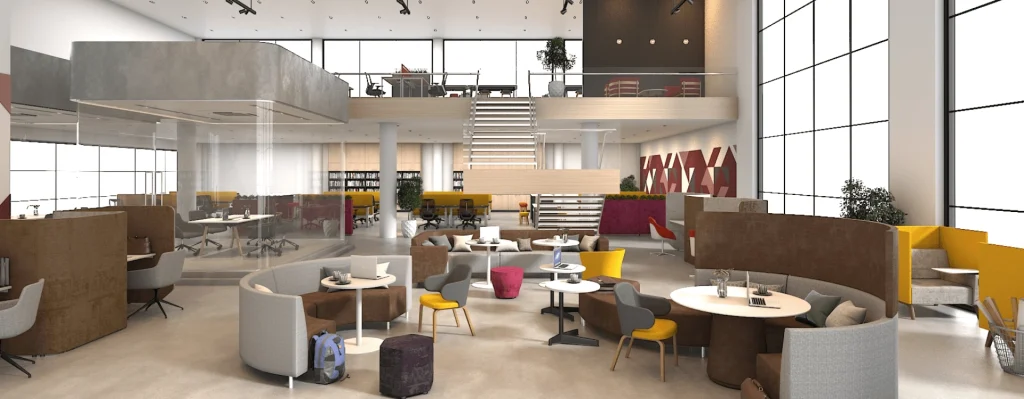
In short, hybrid office design is about creating a place where people want to be—not a place they have to be.
Conclusion: The Office Must Earn Its Place in the Hybrid Era
The workplace has evolved. It must now compete with the comfort and convenience of home. By designing an environment that supports collaboration, focus, movement, and well-being, companies can transform the office into a space that attracts employees organically.
A hybrid-ready office doesn’t rely on mandates.
It relies on experience.
And when the experience is right, people return—naturally, consistently, and enthusiastically.